

The recent dissertation by D. Krempus (TU Delft, 2025) provides a brilliant but sobering look at the future of turbofans. By adding an Organic Rankine Cycle (ORC) to recover waste heat, a fuel saving of 4% is projected.
While the engineering is impressive, it highlights a dead end: we are adding mass, drag, and volatile organic working fluids (like cyclopentane) just to scrape back a fraction of the 50% energy loss inherent in gas turbines.
The HPDDv26 offers a radical 'Escape Route' from this complexity:
-
From 4% to 62% Efficiency: Instead of a complex "bottoming unit" to salvage waste heat, our Closed Thermal Cascade is part of the core 600-bar cycle. We don't salvage waste; we prevent it, achieving a 62% LHV efficiency.
-
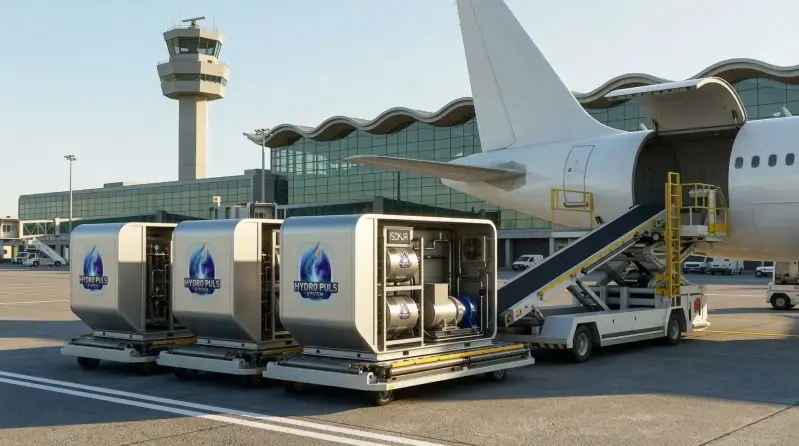
Massive Weight Reduction: Krempus’ model struggles with increased aircraft mass and drag. The HPDD is a compact, high-power-density transductor. We replace tons of turbines and heat exchangers with a streamlined, modular 'Swarm'.
-
Inherent Safety & Redundancy: While a CC-TF engine adds new failure modes, the HPDD provides modular redundancy. If one module needs service, the mission continues. Plus, our exhaust stays below 60°C—no secondary ORC needed to cool things down.
-
Mastering Thermodynamics: Krempus notes that further gains require "advanced heat exchanger technology." We’ve already solved this with Inconel-718 precision (109 µm expansion at 230°C) and a friction-free 5-micron gap.
We don't need to "patch" the turbofan. We need to replace the cycle. The HPDD is the new Mondiale Standaard for carbon-neutral aviation.
#AerospaceEngineering
#TUDelft
#HydrogenAviation
#HPDD
#Thermodynamics
#Innovation
#MRO
#Decarbonization